


M&A Report


|
At a Glance
This article is part of Bain's 2022 M&A Report. For years, the automotive and mobility industry undervalued M&A capabilities. As recently as 2016, most activity involved traditional scale deals aimed at enabling manufacturers and suppliers to get bigger and to generate the cost synergies that come with economies of scale. The skills required were fairly straightforward to develop and rely on, deal after deal. Now the industry finds itself deep in the biggest period of disruption in its history. In addition to consolidating for leadership, companies increasingly need to expand into new businesses and acquire new technology and innovation capabilities, especially in what we refer to as the “5 RACES”:
Despite a global semiconductor chip shortage and other lingering effects of the Covid-19 pandemic, as of October 2021, there were 48 deals valued greater than $100 million totaling $47 billion compared with 29 deals and $20 billion in 2020 (see Figure 1). It was a year in which private equity showed more interest, pumping up the competition; also, the number of special purchase acquisition companies increased.
Figure 1
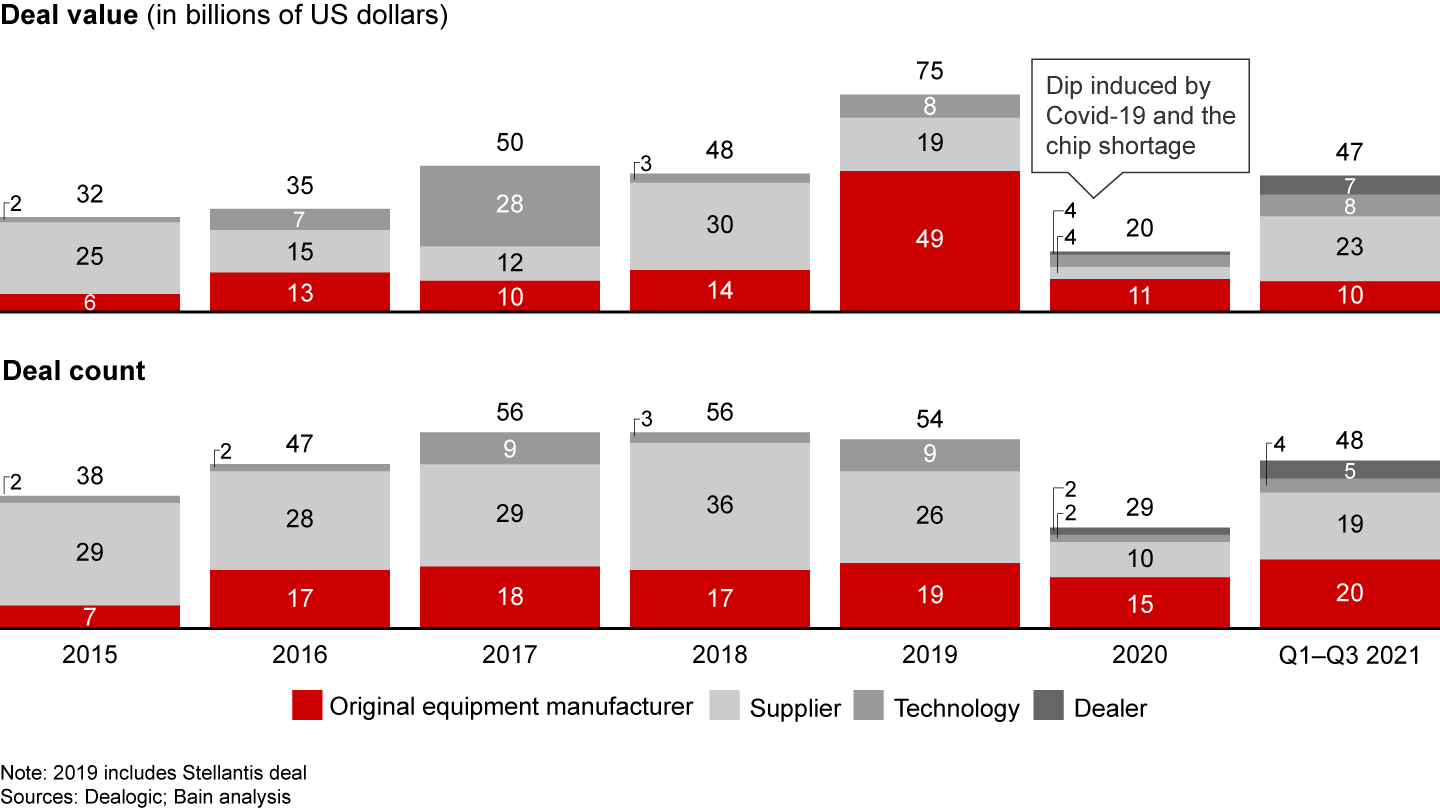

Even with record volumes, automotive and mobility companies have been comparatively slow to pursue inorganic growth. As the pace of change intensifies, inorganic acquisition enables companies to quickly develop required new capabilities. Hence, they need to make M&A strategy a key part of their business strategy and aggressively sharpen their M&A muscles. That requires perfecting new approaches in screening, diligence, and integration for different kinds of deals. There still is opportunity to consolidate for scale leadership. In fact, among the major deals of 2021 was Goodyear’s acquisition of Cooper Tire & Rubber to strengthen Goodyear’s global positioning, one of 14 scale deals totaling $13 billion last year. That consolidation takes place beyond manufacturing and suppliers. In October, Asbury Automotive Group bought Larry H. Miller Dealerships, the eighth-largest dealership group in the US, for $3.2 billion, stretching Asbury’s reach from coast to coast.
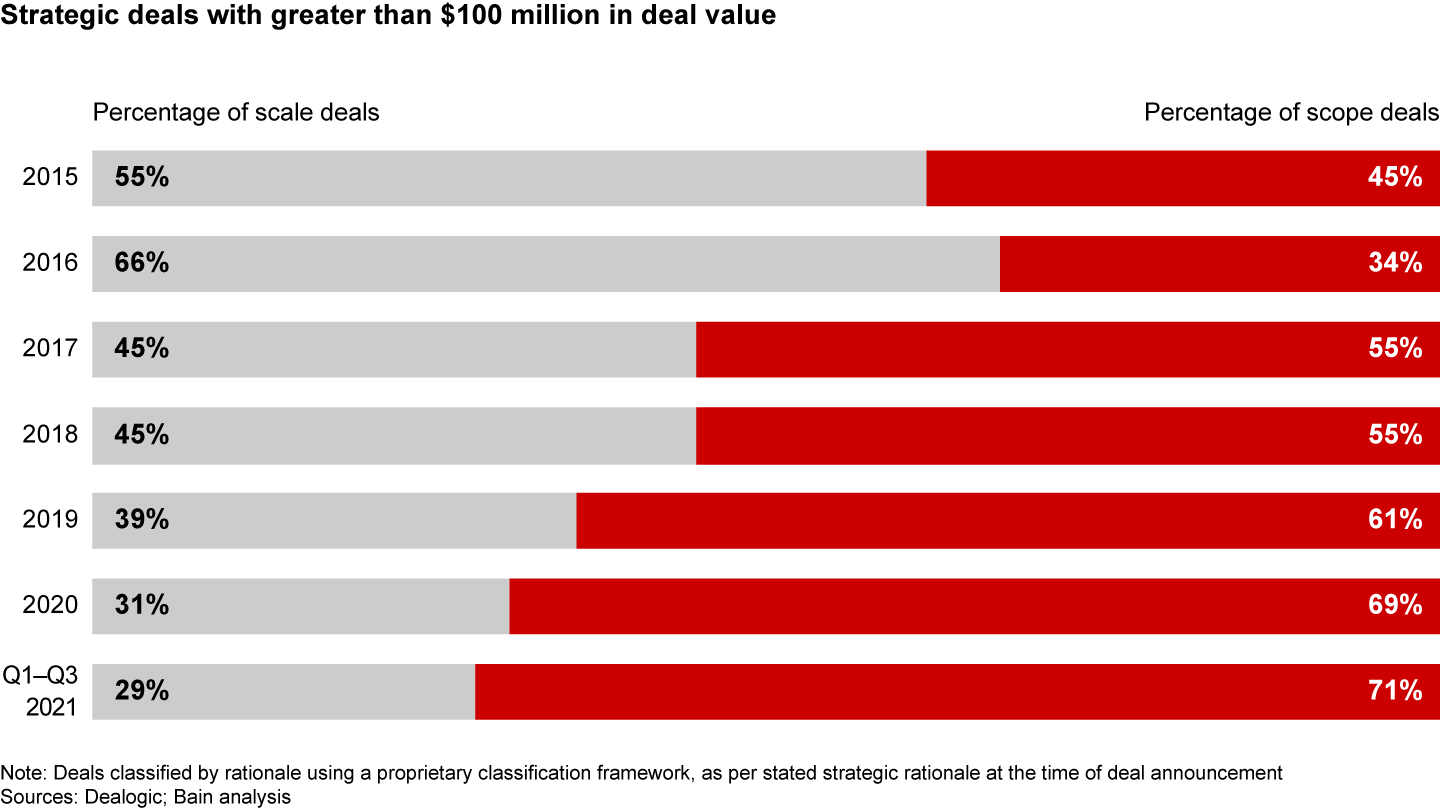
The number of scale deals is overshadowed, however, by scope deals aimed at entering a new market or acquiring a new capability. Scope deals now represent about 70% of automotive and mobility transactions with deal values greater than $100 million (see Figure 2). For example, French car parts supplier Faurecia’s acquisition of German auto lighting company Hella in 2021 helps Faurecia further expand its activities as a systems provider, increasing exposure to fast-growing segments in light of industry trends.
Figure 2

Suppliers such as Faurecia face growing competition from the technology companies that they seek to acquire. Qualcomm is a company better known for semiconductors, software, and services related to wireless technology. This year, however, it teamed with investment group SSW Partners to buy Swedish automotive tech company Veoneer to expand its offering for advanced driver-assistance systems. Not all capability expansions can be managed via acquisitions, so building smart partnerships and joint ventures will be an important tool as well. As manufacturers and suppliers seek proximity to specialists in fields such as autonomous driving, these partnerships will play an important role across industries and geographies. That’s why established automobile manufacturers are now cooperating with Silicon Valley giants while European top dogs team with Chinese climbers and billion-dollar companies. For example, Stellantis and Samsung SDI entered into a memorandum of understanding to form a joint venture to produce battery cells and modules for North America (see “Delivering Results in Joint Ventures and Alliances Requires a New Playbook”).
Unleash the full potential of M&A transactionsCompanies in the automotive and mobility industry can only take advantage of the opportunities on the market if they have the right structures and processes in place. The best companies rely on five important levers.
For both manufacturers and suppliers, it’s a huge shift to begin viewing young hardware and software companies as potential competitors, partners, takeover candidates, or acquirers. But broadening one’s view, making M&A strategy core to business strategy, and rigorously expanding M&A competence are the automotive and mobility industry’s keys to the future. Read our 2022 M&A Report |